Episode Transcript
[00:00:00] Speaker A: So today's deep dive is centered on what's a really fascinating philosophical reflection from someone in the commercial real estate world.
[00:00:08] Speaker B: Yeah. And it's really about the hidden cost of playing it safe.
[00:00:10] Speaker A: You know, exactly like the deep seated psychology of hesitation. We're getting into why waiting for that perfect, flawless data before making a decision might actually be like the riskiest move you can possibly make.
[00:00:24] Speaker B: Right. Which is so counterintuitive.
[00:00:25] Speaker A: It totally is. And we've got this incredible source material today that uses the, you know, highly analytical, super high stakes world of commercial property investment to explore this much broader truth.
[00:00:38] Speaker B: The truth about how we navigate our careers. Right. And just our lives in general.
[00:00:42] Speaker A: Yeah.
[00:00:43] Speaker B: It's this profound shift in perspective because the author takes this industry that is notoriously obsessed with mitigating risk, I mean, through endless spreadsheets and models, and they turn that logic completely on its head.
[00:00:55] Speaker A: Completely.
[00:00:55] Speaker B: It forces us to ask whether our constant desire for certainty is actually holding us back from. Well, meaningful.
[00:01:03] Speaker A: Right. And that is exactly how we're going to approach this today. So if you're listening to this right now, I want you to consider it a mirror.
[00:01:10] Speaker B: Yeah, that's a good way to look at it.
[00:01:12] Speaker A: Because whether you manage a massive investment fund or you run your own startup, or maybe you're just like trying to navigate a major career transition. If you have ever felt paralyzed because you needed just a fraction more information before making a move, this deep dive is going to really challenge your default settings.
[00:01:29] Speaker B: Oh, absolutely. But to set the stage, I think we really need to understand the baseline mindset of the professionals in this specific industry.
[00:01:37] Speaker A: Yeah, the commercial real estate folks.
[00:01:39] Speaker B: Right. Because they operate on a very, very specific temporal reality.
[00:01:44] Speaker A: Okay, so let's visualize that for a second. Imagine you're standing on the sidewalk in front of a quiet, slightly rundown suburban office building.
[00:01:54] Speaker B: Or even like an underperforming, totally empty hotel.
[00:01:58] Speaker A: Yeah, perfect. An empty hotel. If you or I walk past that structure, we just process the immediate physical reality. Right. We see the cracked asphalt, the faded paint, maybe a leasing sign that's been sun bleached for like three years.
[00:02:12] Speaker B: Right. You're just seeing what's literally in front of you.
[00:02:15] Speaker A: Exactly. We're looking at the present condition, which is obviously heavily burdened by the past.
[00:02:21] Speaker B: We just register the static facts, the concrete, the steel. Yeah, but an investment professional does not see that physical reality at all. Their, their optical lens is fundamentally different.
[00:02:34] Speaker A: Completely different.
[00:02:35] Speaker B: When they look at that exact same empty hotel, they are envisioning a thriving workforce, housing, community. Like with A fully stabilized rent role.
[00:02:44] Speaker A: They're living entirely in what the source material calls the yield of tomorrow.
[00:02:48] Speaker B: The yield of tomorrow. I love that phrase.
[00:02:51] Speaker A: It's so evocative. Because they spend their entire professional lives projecting three or even ten years into the future.
[00:02:57] Speaker B: Right.
[00:02:57] Speaker A: They're constantly analyzing broader macroeconomic cycles.
[00:03:01] Speaker B: Right.
[00:03:02] Speaker A: And they are deep in the weeds calculating capitalization rates, which.
[00:03:05] Speaker B: Oh, cap rates. Yeah, yeah.
[00:03:06] Speaker A: And for anyone listening who is outside the industry, a cap rate is essentially the expected rate of return on a real estate asset.
[00:03:14] Speaker B: It's basically the metric they use to gauge both the risk and the potential annual yield of a property.
[00:03:21] Speaker A: Exactly. And to arrive at those metrics, they are engaging in, like, rigorous underwriting.
[00:03:27] Speaker B: Oh, incredibly rigorous.
[00:03:28] Speaker A: They're doing this super complex mathematical modeling that's required to prove that a dormant piece of land today can generate a very specific, reliable cash flow tomorrow.
[00:03:39] Speaker B: Right. Their whole professional existence relies on being able to construct the future accurately on paper before they ever lay a single brick.
[00:03:47] Speaker A: Which is exactly what makes the author's revelation here so incredibly striking.
[00:03:51] Speaker B: Yeah, it's such a pivot.
[00:03:53] Speaker A: Because you have this individual who is deeply entrenched in this forward looking, hyper analytical profession and suddenly they are staring dead into the rearview mirror.
[00:04:02] Speaker B: And the trigger for that wasn't even industry related.
[00:04:04] Speaker A: No, not at all. The epiphany that triggered this whole reflection didn't come from a new market report or like a sudden shift in interest rates. It came from a quote by the legendary Hollywood actor James Stewart.
[00:04:18] Speaker B: Jimmy Stewart. Like reflecting on this iconic generation defining career.
[00:04:23] Speaker A: Yeah. George Bailey himself. The quote that lodged itself in the author's mind was Stewart looking back on his life and saying, let me get it right.
If I had my career over again, maybe I'd say to myself, speed it up a little.
[00:04:37] Speaker B: Just speed it up a little. The sheer unexpectedness of that sentiment is what anchors this entire philosophy.
[00:04:43] Speaker A: It really is.
[00:04:44] Speaker B: Because we naturally assume that reaching the absolute summit of an industry requires this very cautious, methodical, like, almost error free ascent.
[00:04:53] Speaker A: Okay, but wait, I have to push back on this premise immediately.
[00:04:56] Speaker B: Go for it.
[00:04:56] Speaker A: Because James Stewart won the game.
[00:04:58] Speaker B: He did.
[00:04:59] Speaker A: He didn't just survive Hollywood, he defined it. I mean, we are talking about the star of It's a Wonderful Life. Vertigo, Rear Window, Massive classics. Right. So if I'm managing my own career or advising a client, extreme caution and really careful script selection seem like the exact mechanisms that kept him from failing.
[00:05:19] Speaker B: Sure.
[00:05:19] Speaker A: So why on earth would someone who achieved that level of prestige feel like they move too slowly?
[00:05:25] Speaker B: Well, I mean, Your reaction is the natural consensus.
[00:05:28] Speaker A: Right, Right.
[00:05:29] Speaker B: But it assumes that speeding it up implies acting recklessly or taking on bad scripts just to stay busy. Right, but if we examine the broader argument the author is making here, Stewart isn't lamenting a lack of output. He is pointing to the empty spaces between the actions.
[00:05:45] Speaker A: Oh, interesting.
[00:05:46] Speaker B: Yeah. The source text identifies this as the invisible tax that hesitation levies on successful journeys.
[00:05:52] Speaker A: The invisible tax, man. That phrasing implies this relentless, creeping cost that you don't even realize you're paying until the end of the fiscal year.
[00:06:00] Speaker B: Exactly. Or in Stuart's case, the end of a lifetime career. That is the perfect way to frame it, because the cost isn't financial, it's temporal. It's paid in time. The greatest thief of momentum isn't actual failure. I mean, when you fail, you acquire immediate, tangible data.
[00:06:15] Speaker A: You learn something.
[00:06:16] Speaker B: Right. Failure forces a pivot. It refines your strategy. But the actual thief is the time spent standing on the edge of a decision, deliberating over a set of variables that will never, ever perfectly align.
[00:06:28] Speaker A: Because the perfect moment is entirely mythological.
[00:06:31] Speaker B: It's a complete illusion. So when a highly accomplished individual like Stuart wishes he had sped things up, he's recognizing the immense emotional and temporal energy that he wasted agonizing over whether
[00:06:43] Speaker A: he was truly ready, rather than just trusting his talents.
[00:06:47] Speaker B: Exactly. Trusting the foundation of his talent and just taking the leap.
[00:06:50] Speaker A: But, you know, Stewart had the luxury of reflecting on his hesitation at the twilight of a long life.
[00:06:55] Speaker B: Very true.
[00:06:56] Speaker A: If we transition this philosophy back into the high stakes arena of commercial real estate, the market punishes that hesitation immediately.
[00:07:03] Speaker B: Ah, brutally.
[00:07:04] Speaker A: And yet, as the source text points out, the industry practically worships at the altar of patience.
[00:07:09] Speaker B: It is deeply institutionalized. I mean, the standard operating procedure, especially, especially in hospitality and commercial acquisitions, is literally just to wait.
[00:07:17] Speaker A: You hear it constantly in boardroom conversations.
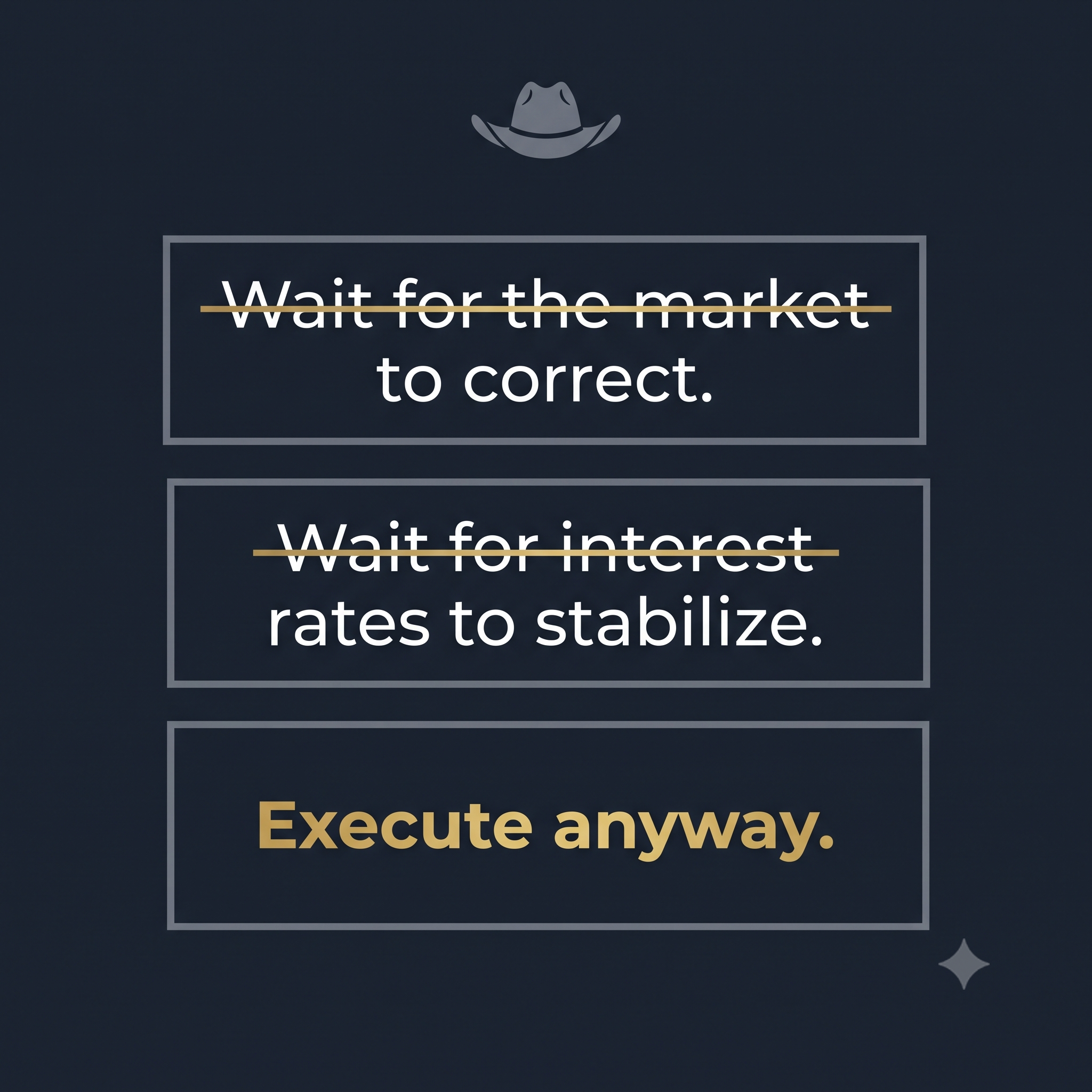
[00:07:19] Speaker B: Oh, yeah, let's wait for the market to correct.
[00:07:23] Speaker A: Let's hold off until the Federal Reserve stabilizes interest rates.
[00:07:26] Speaker B: Right. Or we can't issue a letter of intent until we have the absolute, perfect, foolproof data set.
[00:07:33] Speaker A: Yes, you have entire armies of analysts whose implicit job description is to find highly technical reasons not to execute a deal.
[00:07:42] Speaker B: And they view that caution as an impenetrable shield. But the author exposes a fatal flaw in this logic, which is that in a highly dynamic, fast moving economic environment, over deliberation is not prudence, it's a massive liability.
[00:07:57] Speaker A: It totally is.
[00:07:58] Speaker B: The market does not pause to accommodate your comfort level.
[00:08:00] Speaker A: Here's where it gets really interesting to Me? It's like waiting to buy a ticket for a train until you are 100% sure it will reach its destination exactly on time.
[00:08:10] Speaker B: Right.
[00:08:10] Speaker A: You're standing on the platform demanding guarantees from the conductor, demanding weather reports from the next three cities, and by the
[00:08:17] Speaker B: time every single condition is perfectly verified,
[00:08:19] Speaker A: the train has already left the station.
[00:08:21] Speaker B: Exactly.
[00:08:22] Speaker A: And a more decisive traveler is sitting in your seat. You're calling yourself prudent, but you still missed the trip.
[00:08:29] Speaker B: That perfectly illustrates the concept the author calls hesitation in a custom suit.
[00:08:34] Speaker A: Oh, my gosh. I cannot get over how brilliant that phrase is. Hesitation in a custom suit.
[00:08:40] Speaker B: It is a phenomenal distillation of boardroom psychology.
[00:08:43] Speaker A: It really is.
[00:08:44] Speaker B: Because in professional high stakes environments and meeting fear is taboo, you don't sit at a conference table and say, hey, guys, I'm terrified of making a bad call.
[00:08:53] Speaker A: Right. You'd be laughed out of the room.
[00:08:55] Speaker B: Exactly. So instead, we dress that fear up in respectable terminology. We label it extensive due diligence or macroeconomic observation. Yes, we tailor a beautiful custom suit for our anxiety, and we just parade it around as if it's profound wisdom.
[00:09:11] Speaker A: You just hide your paralysis is behind a beautifully formatted spreadsheet. But okay, if I'm playing devil's advocate here, isn't that spreadsheet providing vital protection? Like you need that data?
[00:09:21] Speaker B: Well, sure, it provides protection against obvious surface level disasters. Yes. Okay, but the author argues that treating caution as your primary strategy actually blinds you to rapid market shifts.
[00:09:34] Speaker A: How so?
[00:09:35] Speaker B: Well, if you sit on the sidelines waiting for official data to confirm that interest rates have stabilized, you are already too late.
[00:09:42] Speaker A: Oh, because everyone else sees the same data.
[00:09:44] Speaker B: Right. By the time that data is published and widely accepted, the opportunity has already been priced into the market.
[00:09:50] Speaker A: The prime assets have long been acquired by investors who are willing to execute before the perfect data arrived.
[00:09:56] Speaker B: Exactly. They are the ones who decided to speed it up a little.
[00:09:59] Speaker A: Wow. So the shield of caution effectively becomes a blindfold.
[00:10:02] Speaker B: It really does. It might protect you from a minor misstep, but it completely cuts you off from capturing exceptional value.
[00:10:09] Speaker A: Okay, let's ground this philosophy in reality for a minute. Because it's one thing to speak abstractly about not hesitating, right?
[00:10:17] Speaker B: Yeah, we need examples.
[00:10:19] Speaker A: But we are discussing transactions that involve millions of dollars of investor capital. And the source material highlights several specific high pressure scenarios to demonstrate the actual mechanics of how this momentum is generated.
[00:10:32] Speaker B: Right. The author provides tangible examples of how career defining milestones are achieved. And spoiler alert, none of them involve waiting for ideal conditions and they really
[00:10:42] Speaker A: point to the reality of the job.
True execution happens when you are sitting in a highly tense advisory meeting trying to salvage a completely collapsing purchase and sale agreement.
[00:10:53] Speaker B: Oh, that's a perfect example. Let's look at the mechanics of that specific scenario.
[00:10:57] Speaker A: Yeah, break that down.
[00:10:58] Speaker B: So a purchase and sale agreement, or psa, is the binding contract dictating the terms of a real estate transaction. And when a PSA starts collapsing, it is almost always because a newly discovered variable creates fiction.
[00:11:11] Speaker A: Like what?
[00:11:12] Speaker B: Well, perhaps an environmental report comes back with a slight anomaly. Or maybe a zoning contingency gets delayed at the municipal level.
[00:11:20] Speaker A: Okay, so what does the amateur do in that moment?
[00:11:22] Speaker B: The amateur instinct is to freeze. They want to pause the entire deal, Commission 3 independent secondary environmental studies, and wait until the risk is mathematically reduced to absolute zero.
[00:11:35] Speaker A: But time kills deals.
[00:11:38] Speaker B: Time is the ultimate deal killer.
While you are pausing for a month to gather that final 5% of data, the debt markets might shift.
[00:11:46] Speaker A: Interest rates might tick up 20 basis points.
[00:11:49] Speaker B: Exactly. Or the seller's counterparty might get cold feet and entertain a backup offer.
[00:11:54] Speaker A: So what does the professional do?
[00:11:56] Speaker B: The professional realizes that compressing the timeline is paramount. They say, look, we have 95% of the information. We understand the general parameters of this environmental issue. Let's negotiate a quick escrow holdback and close the deal tomorrow.
[00:12:10] Speaker A: Acting decisively with partial information is actually the less risky move in that context.
[00:12:14] Speaker B: Paradoxically, yes.
[00:12:15] Speaker A: That's wild. Another powerful example the author uses is the decision to plant a flag in a niche emerging asset class before the massive institutional capital arise.
[00:12:25] Speaker B: The iOS example.
[00:12:27] Speaker A: Yes. They specifically mention industrial outdoor storage, or iOS for our listeners who actively track commercial real estate. You know, iOS has been an incredibly hot topic recently.
[00:12:40] Speaker B: It really has. And industrial outdoor storage is exactly what it sounds like. It's basically parcels of land used for storing heavy equipment, trucking fleets, shipping containers, unpaved lots.
[00:12:52] Speaker A: Basically, yeah.
[00:12:53] Speaker B: Historically, this asset class was largely ignored by major institutional investors. I mean, it wasn't glamorous.
[00:12:59] Speaker A: No. It didn't involve building shiny luxury high rises.
[00:13:01] Speaker B: Right. But certain agile investors looked past the lack of glamour and saw the fundamental
[00:13:08] Speaker A: value they recognized the incredibly low overhead, the sticky tenant base and the high yield.
[00:13:12] Speaker B: And this is where we see the mechanics of cap rate compression in action. The early movers acted on their insight
[00:13:18] Speaker A: immediately, while everyone else was hesitating.
[00:13:20] Speaker B: Exactly. Because the institutional funds were busy waiting for a 10 year track record of pristine data, the early investors were able to acquire these iOS assets at high
[00:13:29] Speaker A: cap rates, meaning they paid relatively low prices for assets that generated high yields.
[00:13:34] Speaker B: Right. They accepted the friction of moving first.
[00:13:37] Speaker A: And what happens when the perfect data finally arrives for the big guys?
[00:13:41] Speaker B: Well, by the time the massive institutional funds validate the asset class and decide to roll up these properties into billion dollar portfolios, the early movers are the ones selling to them.
[00:13:52] Speaker A: Wow.
[00:13:52] Speaker B: They sell at drastically lower cap rates, capturing a massive premium. They generated exceptional wealth simply because they compress the timeline between insight and execution.
[00:14:04] Speaker A: But this brings up a crucial tension.
[00:14:06] Speaker B: What's that?
[00:14:06] Speaker A: Well, if I am managing a $50 million fund, I can't just leap wildly into a new asset class just because a Hollywood actor told me to speed things up, right?
[00:14:15] Speaker B: Of course not.
[00:14:16] Speaker A: If speeding it up doesn't mean moving recklessly, how do you actually determine when you've done enough underwriting to safely build a trigger?
It feels like an incredibly dangerous tightrope to walk.
[00:14:27] Speaker B: It is a tightrope, but you have a safety net, and that net is the rigorous foundation of work you've already completed. The author is absolutely not advocating for blind speculative gambling.
You must have immense confidence in your underwriting, your market data, and your cultivated instincts.
[00:14:44] Speaker A: You still have to do the math.
[00:14:46] Speaker B: The math is non negotiable. The critical differentiator is acknowledging the point of diminishing returns.
[00:14:52] Speaker A: The point where more data doesn't actually help.
[00:14:55] Speaker B: Right. There is a specific moment in every analysis where gathering 5% more data will require 50% more time.
The true professional recognizes when their core thesis is structurally sound, they trust the foundation they've built, and they lean into the friction of the unknown.
[00:15:13] Speaker A: Leaning into the friction, that is a really vital concept, because execution inherently creates problems.
[00:15:19] Speaker B: Oh. Execution guarantees pushback. It introduces unforeseen variables and immediate operational fires that need to be extinguished.
[00:15:26] Speaker A: Right.
[00:15:27] Speaker B: Amateurs attempt to avoid this friction by endlessly preparing. They're hoping to engineer a completely turbulence free flight before they ever leave the Runway.
[00:15:36] Speaker A: Which is impossible.
[00:15:37] Speaker B: Totally impossible. Professionals, on the other hand, step directly into the friction. They trust their ability to navigate the turbulence. After they make the decision, they solve
[00:15:46] Speaker A: the problems in the air rather than sitting on the tarmac forever.
[00:15:49] Speaker B: Beautifully said.
[00:15:50] Speaker A: And this entire philosophy of attacking execution didn't just remain an abstract theory for the author, it actually catalyzed a major structural pivot in their own life and career.
[00:16:02] Speaker B: Yeah. The final segment of the source material perfectly illustrates this transition from corporate theory to personal practice.
[00:16:11] Speaker A: The author reveals that this exact mindset drove them to bridge the gap between their daily transactional advisory work and the world of education.
[00:16:19] Speaker B: Right.
[00:16:19] Speaker A: Instead of waiting, they founded an academy and launched intensive masterclasses now, which heavily
[00:16:25] Speaker B: disrupts the traditional timeline in these highly technical industries.
[00:16:29] Speaker A: Absolutely. The established path in commercial real estate, or really any elite financial sector, is that you spend 30 or 40 years quietly hoarding your institutional knowledge.
[00:16:39] Speaker B: Oh, yeah, you gatekeep the strategies.
[00:16:40] Speaker A: You use them exclusively to build your own empire.
Then perhaps when you are semi retired and no longer in the trenches, you might write a retrospective memoir or host a guest seminar.
[00:16:51] Speaker B: Sure, when it's safe, right?
[00:16:53] Speaker A: But the author looked at that delayed ambition model and completely rejected it.
[00:16:58] Speaker B: Because gatekeeping knowledge is fundamentally just another manifestation of hesitation.
[00:17:03] Speaker A: Oh, that's so true.
[00:17:04] Speaker B: It's a way of saying the broader market isn't ready for this yet. Or more likely, I am not ready to share this yet. But they also recognized a core truth. The landscape of opportunity shifts incredibly fast.
[00:17:18] Speaker A: As the Source explicitly states, the market moves too fast for gatekeeping, and life moves too fast for delayed ambitions.
If you hold onto your most valuable insights, waiting for some mythical perfect moment to deploy them to the world, those insights might become entirely obsolete by the time you actually speak up.
[00:17:36] Speaker B: Or worse, you simply run out of Runway to make a meaningful impact. Which circles us perfectly back to James Stewart's reflection.
Stewart wasn't looking back, wishing he had worked more grueling hours or accumulated more wealth. He was wishing he had embraced the friction of the experience with a greater sense of urgency. He wanted less lag time between his creative insights and his actual executions.
[00:17:59] Speaker A: He wanted to strip off the custom suit of hesitation much earlier in the journey.
[00:18:03] Speaker B: Exactly.
[00:18:04] Speaker A: So, translating this massive philosophical shift to you, the listener, what is the practical application here?
[00:18:14] Speaker B: Right? How do you use this?
[00:18:15] Speaker A: Whether you are underwriting a complex portfolio or launching a new product, or just trying to navigate the friction of a shifting economy, the author's message is a call to audit your daily execution.
[00:18:26] Speaker B: But it requires a delicate balance. I mean, the author provides a very clear directive that you must respect the macro cycles.
[00:18:32] Speaker A: You can't just ignore reality, right?
[00:18:34] Speaker B: You cannot ignore the broader economic weather. You have to know if you are sailing into a storm or a tailwind. However, the crucial mandate is that you cannot let the quiet fear of the unknown delay meaningful opportunities.
[00:18:47] Speaker A: The source leaves us with this deeply resonant closing thought.
You spend your life carefully analyzing the yield of tomorrow, only to suddenly realize that tomorrow has already arrived.
[00:18:59] Speaker B: And in that moment, you are either actively executing within that reality, or you are still standing on the periphery, drafting another report about it.
[00:19:08] Speaker A: Wow.
[00:19:08] Speaker B: The ultimate cost of playing it endlessly safe is the Forfeiture of the future you could have actively shaped.
[00:19:14] Speaker A: Well said. Let's do a rapid fire synthesis of the ground we've covered today.
[00:19:18] Speaker B: Sounds good.
[00:19:19] Speaker A: We began by looking through the unique lens of investment professionals. Individuals who live in the future looking past physical decay to underwrite future potential.
[00:19:29] Speaker B: Right.
[00:19:29] Speaker A: And through the unexpected reflection of James Stewart, we explored how even the most successful trajectories can be heavily taxed by the momentum lost to hesitation.
[00:19:38] Speaker B: We examine the insidious nature of hesitation in a custom suit.
[00:19:42] Speaker A: Still my favorite phrase.
[00:19:44] Speaker B: It's so good. We analyzed how professionals routinely dress up their fear of execution as prudent due diligence. And how reliant, relying on caution as a shield effectively blinds them to rapid, highly lucrative market opportunities.
[00:19:57] Speaker A: Then we broke down the tangible mechanics of momentum. We looked at how time kills purchase and sale agreements. And how early movers in emerging asset classes, like the industrial outdoor storage example, captured massive yields simply by acting on partial data before the institutions arrived.
[00:20:13] Speaker B: Right. Because the secret is compressing the timeline between insight and execution, trusting your foundational underwriting and actively leaning into the friction.
[00:20:22] Speaker A: And finally, we explored how this urgency dismantles the traditional gatekeeping of knowledge. Life moves just way too quickly for delayed ambitions. You must respect the broader macroeconomic environment. But you have to attack your daily execution without being paralyzed by the pursuit of absolute certainty.
[00:20:40] Speaker B: It is a totally paradigm shifting way to view your own decision making process.
[00:20:44] Speaker A: It really is. And as we wrap up this deep dive, we want to leave you with a final provocative thought to mull over.
[00:20:50] Speaker B: Okay, let's hear it.
[00:20:51] Speaker A: We have spent this entire discussion analyzing the invisible tax of hesitation and how waiting relentlessly drained your momentum. But I want you to consider the exact mathematical inverse of that tax.
[00:21:04] Speaker B: The invert.
[00:21:04] Speaker A: Consider the compound interest of immediate action.
[00:21:07] Speaker B: Oh, the compounding effect over time. That is where the true value lies.
[00:21:11] Speaker A: Exactly. If you chose to speak, speed up your decision making by just 10% today. Like if you stripped off just one single layer of that custom suit of hesitation and slightly compressed your own timeline between having an insight and executing on it. How dramatically would that alter your own yield of tomorrow five years from now?
[00:21:31] Speaker B: A 10% shift in execution speed alters the entire trajectory of the asset, or in this case, the individual.
[00:21:37] Speaker A: It is something to seriously evaluate the next time you find yourself pausing to order just one more report.
Thank you for joining us for this deep dive. We will see you next time. You've got the perspective. Now it's time to drive the news forward to ensure you never miss a market shift tap. Subscribe on Spotify, Apple Podcasts, or wherever you listen.
If today's insights are going to impact your strategy, share this episode with a colleague or investment partner who needs to see the big picture.
For actionable guides, newsletter subscriptions, and direct advisor consultation, head over to bearinvestors. Com.
Thank you for listening. We'll watch the market closely until next week.