Episode Transcript
[00:00:00] Speaker A: Right now, an entirely empty, physically distressed office park in the Midwest might actually represent a safer, more lucrative path to generational wealth than a fully leased performing glass tower in Manhattan.
[00:00:15] Speaker B: I know it sounds entirely backward. I mean, on paper it makes zero sense, right?
[00:00:18] Speaker A: It completely defies conventional logic. But across the commercial real estate landscape. Look, a massive commercial debt maturity wall is moving in fast. We are analyzing a structural wave that is aggressively wiping out passive ass owners.
[00:00:32] Speaker B: Specifically the institutions and sponsors who built their entire portfolios. Assuming that peak era near zero interest rates were guaranteed fixtures of the global economy.
[00:00:42] Speaker A: Exactly. And that permanently compressed cap rates were just the new normal.
[00:00:46] Speaker B: But by the end of this deep dive, you will understand the exact operational blueprint, what is mathematically defined as the architecture of the bounce required to extract significant wealth from these distressed capital stacks and market troughs.
You will walk away with a definitive three step operational advantage to navigate the collapse of traditional hospitality, retail and office assets during a severe macro contraction.
[00:01:12] Speaker A: Today, we are executing a rigorous review of exclusive market intelligence dispatched by Preanshu or Pre Ata Thakar.
Throughout this briefing, we will routinely ground our analysis in Pree's dual authority as a premier commercial real estate and hotel investment advisor, as well as a licensed realtor.
[00:01:29] Speaker B: Pre operates as a definitive boots on the ground fiduciary. He is primarily protecting and deploying client capital allocations across central Ohio and the broader Midwest markets.
[00:01:38] Speaker A: Right, and this intelligence is, well, essentially a masterclass in navigating an operational crisis. The core structural problem we are examining is one of disguised weakness.
[00:01:47] Speaker B: Precisely because when interest rates hovered near zero for a decade, the commercial real estate market behaved like a trust fund kid inheriting a fully staffed mansion.
[00:01:58] Speaker A: Access to essentially free debt masked incredibly thin operating margins and really just fundamentally broken operational models. Valuations became completely detached from cash flow reality.
[00:02:11] Speaker B: Yeah, and now the cost of capital has spiked violently. Valuations are dropping rapidly. And as this dispatch warns, buying a property simply because the price per square foot looks discounted is a massive capital risk.
You are just catching a falling knife.
[00:02:25] Speaker A: The Dispatch uses a great quote from General George S. Patton to frame the required mindset for this cycle. He said, success is how high you bounce when you hit the bottom.
[00:02:34] Speaker B: It's a perfect analogy for commercial real estate right now. Writing a zero interest bull market does not prove you possess underwriting genius.
[00:02:40] Speaker A: No, it just proves you had a seat at the table and capital was practically free.
[00:02:44] Speaker B: Right. The true test of a sponsor begins when the macro environment stops subsidizing operational inefficiency.
A market trough requires an immediate shift from passive fee collecting ownership to highly active aggressive value creation.
[00:03:01] Speaker A: Let's break down the core mechanics and technical hurdles of this asset.
[00:03:05] Speaker B: Because if we are going to understand how this debt maturity wall is functioning, we have to isolate the granular financial metrics driving it. Lenders are fundamentally altering their behavioral models right now.
[00:03:17] Speaker A: For the last 10 years, when a commercial loan came due on an underperforming asset, banks relied heavily on a strategy known in the industry as extend and pretend.
[00:03:25] Speaker B: They would simply roll the loan over for another three to five years, pretend the asset still held its peak 2019 valuation, and intentionally avoid taking a massive write down on their balance sheet.
[00:03:36] Speaker A: But the intelligence makes it clear that the regulatory environment has shifted. Extend and pretend is effectively dead.
[00:03:42] Speaker B: I want to focus on the banking mechanics behind that shift though. What is happening inside the bank that stops them from just kicking the can down the road again?
[00:03:48] Speaker A: It really comes down to capital reserve requirements and extreme regulatory heat.
[00:03:53] Speaker B: Exactly. When a bank holds a non performing loan, federal regulators require them to hold more liquid capital in reserve against that potential loss.
Capital sitting in reserve is dead weight. The bank cannot lend it out to generate yield.
[00:04:08] Speaker A: And with elevated interest rates, the discrepancy between the loan's paper value and the asset's actual market value is, well, it's just too large for regulators to ignore. The banks are being forced to recognize
[00:04:19] Speaker B: the loss, which forces the sponsor into an inescapable corner. To fully grasp the severity of that corner, you have to understand capitalization rates or cap rates.
[00:04:29] Speaker A: Historically, we experience a decade of massive cap rate compression. I look at cap rate compression like a tightly coiled spring, right? A cap rate is simply your unlevered yield. So if a building generates $100,000 in net operating income and you buy it for $1 million, that is a 10% cap rate.
[00:04:46] Speaker B: But during the peak, investors were willing to pay absolute top dollar, accepting incredibly low yields, say 3 or 4%, because they could borrow the money to buy the building. At 2%.
[00:04:57] Speaker A: The spread was thin, but it was positive.
[00:05:00] Speaker B: But when interest rates jumped to 7 or 8%, that coiled spring aggressively snaps. The math shatters.
[00:05:08] Speaker A: Because if your building yields 4% but your debt costs 7%, you are bleeding cash every single month.
[00:05:15] Speaker B: Exactly. The only way to fix that equation is to drastically raise your income, which is nearly impossible in a softening economy, or drastically lower the value of the
[00:05:25] Speaker A: property, which instantly wipes out the sponsor's equity. Sponsors holding these assets are now being forced to either inject massive amounts of fresh capital, raise, renegotiate their debt structures from a position of profound weakness or just surrender the keys entirely.
[00:05:39] Speaker B: As Prey points out in this week's perspective, distress alone is not a buy
[00:05:44] Speaker A: signal that requires immediate clarification for anyone looking to deploy capital.
[00:05:48] Speaker B: Right now, it does. If an office park or a hotel in central Ohio is trading at a 40% discount to its 2019 valuation, the traditional contrarian instinct is to just buy the diploma.
[00:05:59] Speaker A: But purchasing a discounted property without a highly precise execution plan, verifiable localized demand drivers, and realistic exit capitalization assumptions is essentially acquiring a pure liability, right?
[00:06:12] Speaker B: If the underlying business model of the property remains broken, a lower entry price does not guarantee a bounce, it just dictates exactly how much capital you will incinerate while trying to keep the doors open.
[00:06:23] Speaker A: Let's drill into those localized demand drivers the intelligence focuses heavily on hospitality metrics, specifically rev payer, which is revenue per available room.
[00:06:32] Speaker B: And this metric is simply the average daily room rate multiplied by the occupancy rate.
[00:06:37] Speaker A: During recent inflationary periods, hotel operators pushed daily rates to historic highs, which artificially propped up their rev pair and masked the fact that physical occupancy was actually dropping.
[00:06:47] Speaker B: But now daily rates have hit a ceiling, occupancy remains soft, and rev PR is collapsing across generalized markets.
[00:06:54] Speaker A: But this is where hyper local micro market data completely destroys the macro blanket approach.
[00:07:01] Speaker B: It really does. You can analyze a specific submarket in the Midwest and identify a hotel with a collapsing rev PA because its entire model relied on legacy corporate travel that frankly, structurally hasn't returned yet.
[00:07:15] Speaker A: Three miles away in that exact same zip code, another hospitality asset is thriving.
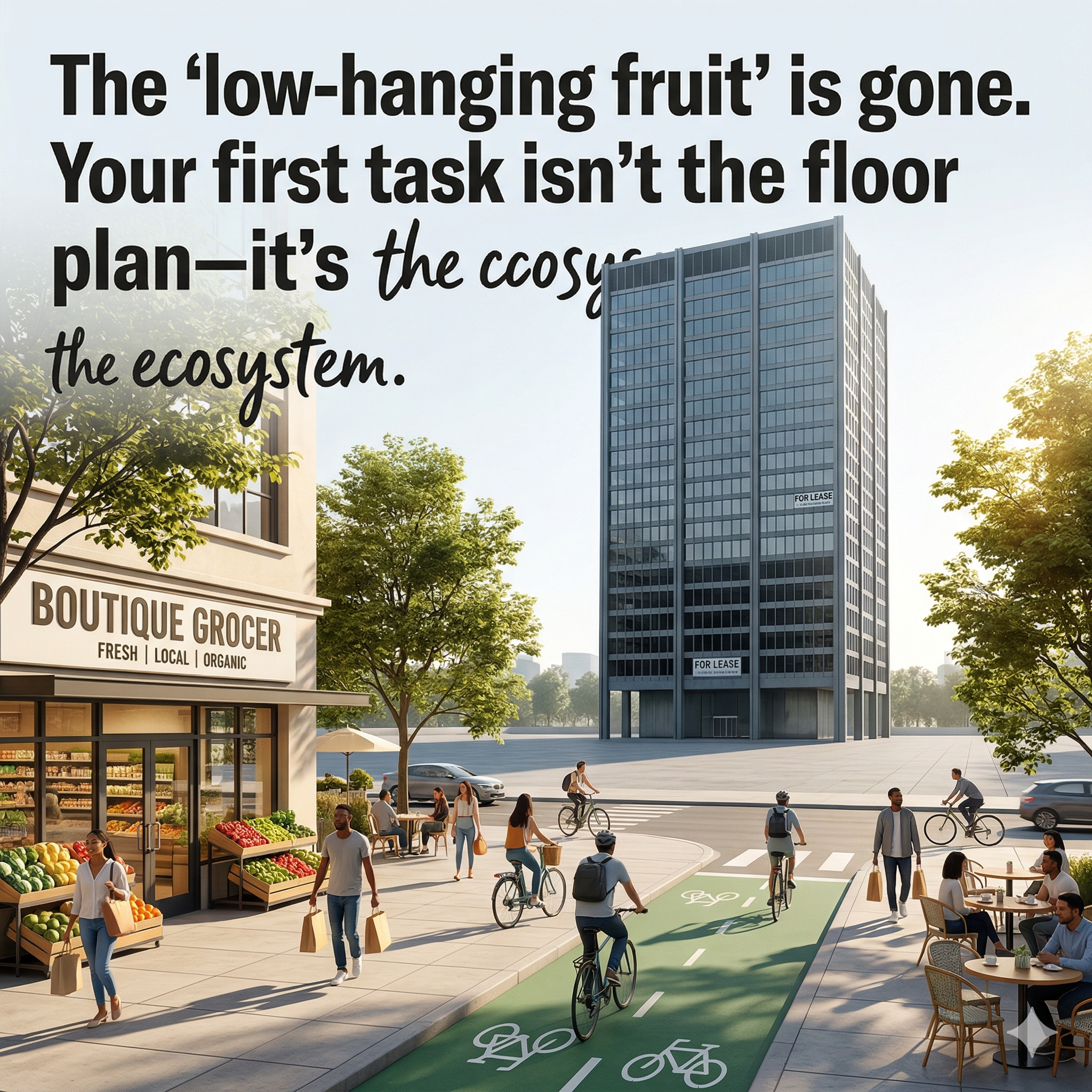
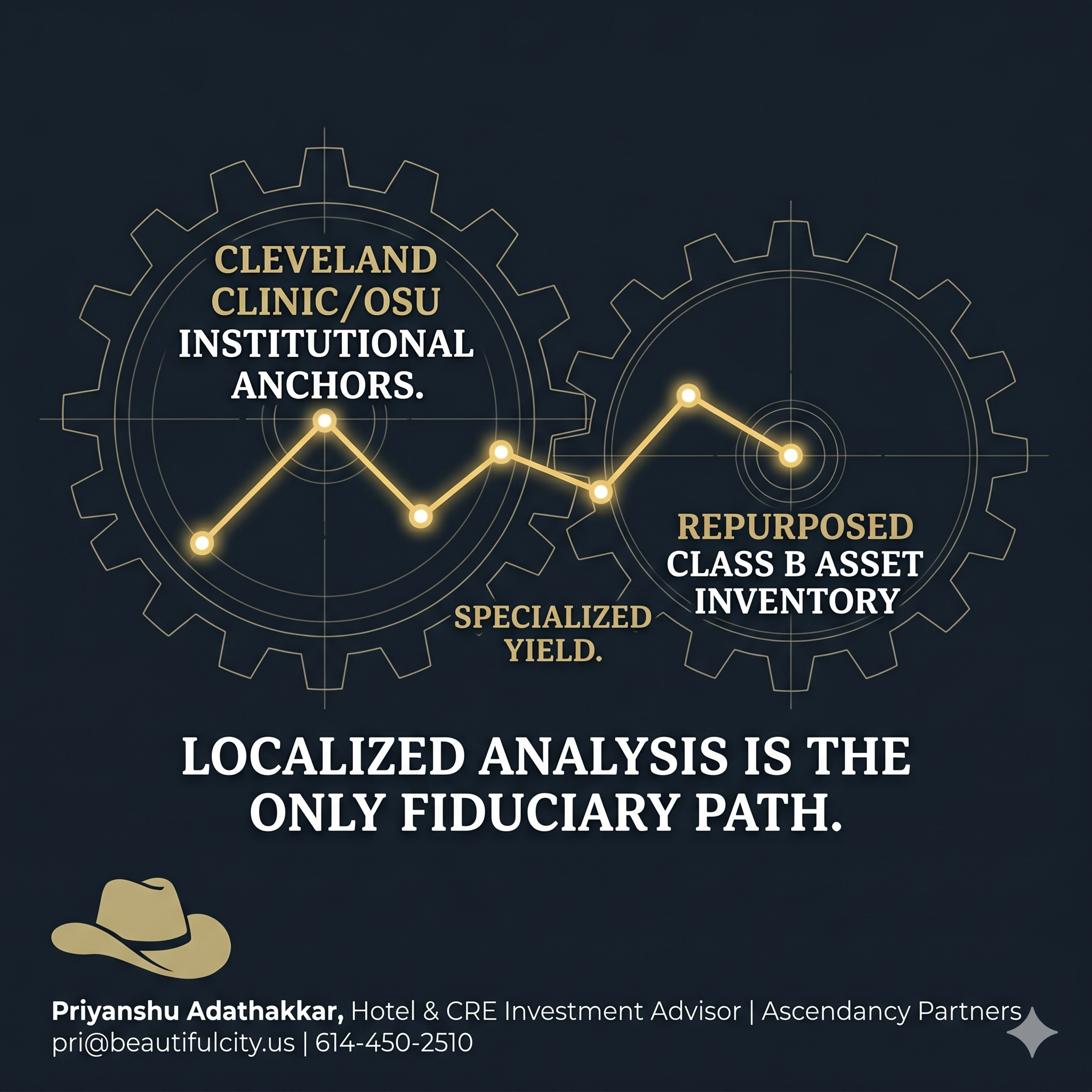
[00:07:21] Speaker B: Why? Because it is tethered to localized recession resistant demand drivers. Think of a rapidly expanding regional medical center or a massive university infrastructure project.
[00:07:32] Speaker A: If you are a passive analyst operating from a spreadsheet in New York looking only at a zip code's average performance, you completely miss this granular reality. You do I have to push back on the viability of stepping into these failing assets at all though. If you are looking at a retail center or a hotel that is actively hemorrhaging net operating income or noi, and the regional bank is aggressively threatening foreclosure, my instinct is to run.
[00:07:54] Speaker B: I mean, there's a standard reaction.
[00:07:56] Speaker A: Why would any rational private capital provider voluntarily step into that scenario? Aren't they just throwing good money into a burning building?
[00:08:06] Speaker B: Price boots on the ground approach illustrates exactly why highly sophisticated private capital steps in and it comes down to active operational discipline and the strategic deployment of rescue equity. Okay, it is not throwing money into a fire. It Is buying the fire extinguisher at a steep premium to secure control of the valuable land beneath it.
[00:08:27] Speaker A: Breakdown rescue equity. Mechanically, what does that actually look like in the capital stack?
[00:08:31] Speaker B: Imagine a sponsor who purchased a retail center for $20 million at the peak of the market. The debt maturity wall hitch. Today, the bank refuses to refinance at that inflated valuation.
[00:08:41] Speaker A: Right, because of the regulatory heat we discussed.
[00:08:44] Speaker B: Exactly. The bank demands a $5 million principal paydown immediately to resize the loan or they begin foreclosure proceedings. The original sponsor does not have the liquidity. Rescue equity is highly specialized private capital that steps into that specific gap.
[00:08:58] Speaker A: But at what cost? I mean, that level of risk cannot be priced cheaply.
[00:09:01] Speaker B: It is extremely extensive capital. It's typically structured as preferred equity.
[00:09:06] Speaker A: Ah, so a waterfall structure.
[00:09:08] Speaker B: Right. This waterfall structure means the new capital provider gets paid their return before the original sponsor sees a single dime of profit.
[00:09:16] Speaker A: The original sponsor accepts these punishing terms because it prevents a total 100% wipeout of their initial investment.
[00:09:23] Speaker B: Precisely. And for the rescue equity provider, they are securing a double digit yield secured by the physical real estate at a basis far below replacement cost.
[00:09:33] Speaker A: And critically, it stabilizes the asset's operating budget. Without that rescue capital, the sponsor is forced to slash the operational budget to pay.
[00:09:41] Speaker B: The bank deferred maintenance piles up the roof leaks, Anchor tenants break their leases and the NOI enters a terminal death spiral.
[00:09:49] Speaker A: The rescue equity essentially buys the active operator the Runway needed to execute a physical turnaround.
[00:09:56] Speaker B: Yes, when an asset's original business model runs out of steam, hitting the bottom is merely the start of the heavy lifting.
[00:10:02] Speaker A: But here is where the underwriting actually gets weird.
[00:10:05] Speaker B: Why does it get weird?
[00:10:06] Speaker A: Because traditional financial models are entirely backward looking. They rely on historical NOI and past comparable sales. But when you are forced to radically restructure a distressed asset to survive this debt wall, you have to underwrite a future operational model that physically does not exist yet.
[00:10:23] Speaker B: Moving on to our next major pillar, how this exposure was entirely neutralized, we are looking at the definitive architecture of the bounce.
[00:10:31] Speaker A: This is the three step blueprint required to extract residual value. Where traditional algorithms only see market friction and write downs. Step one is the zoning arbitrage. Step two is the mezzanine bridge. And step three is the NOI floor.
[00:10:45] Speaker B: Let's start with the physical reality of step one. We are talking about adaptive reuse. Converting defunct hospitality or 1980s suburban office inventory into high demand workforce housing or light industrial flexible space.
[00:10:57] Speaker A: How pre saw what the spreadsheets missed is critical to understanding this phase.
[00:11:02] Speaker B: Absolutely. A standard algorithmic model evaluates a 40% vacant office park situated on an Ohio highway interchange and prices in a permanent dec.
It sees a stranded asset heading toward obsolescence.
[00:11:13] Speaker A: But to a premier advisor, that immense market friction is an operational invitation to execute the highest and best use alternative.
[00:11:21] Speaker B: But let's be intellectually honest here. Adaptive reuse is dangerously romanticized in the press right now.
[00:11:28] Speaker A: Oh, entirely. It is not just hanging some drywall, painting the exterior and marketing a former cubicle farm as a luxury studio apartment.
The mechanical hurdles are absolutely brutal.
[00:11:39] Speaker B: They are staggering. If you look at a typical 100,000 square foot suburban office building, you are dealing with massive deep floor plates. The center of the building receives zero natural light.
[00:11:50] Speaker A: Right. You cannot legally or practically place residential units in a dark core.
[00:11:55] Speaker B: Exactly. Plus you are dealing with centralized commercial plumbing stacks instead of distributed residential plumbing. And you have highly complex commercial H VAC routing that must be completely torn out.
[00:12:07] Speaker A: So how does an active operator solve the deep floor plate problem?
[00:12:10] Speaker B: Mechanically, through aggressive architectural restructuring. You core out the center of the building. Literally. You either cut a hole in the roof to create an open air residential atrium, bringing natural light to the interior units, or you utilize the dark core of the building for climate controlled self storage for the tenants while the exterior
[00:12:29] Speaker A: ring of the floor plate is converted into the actual residential units.
[00:12:33] Speaker C: Right.
[00:12:33] Speaker B: It requires immense operational grit.
[00:12:36] Speaker A: And above all of that physical complexity. You face the bureaucratic nightmare of local zoning. I mean, you cannot just decide an office is now an apartment building.
[00:12:46] Speaker B: Which is precisely why monitoring municipal adaptive reuse policy is a mandatory component of this strategy.
[00:12:52] Speaker A: Local governments, particularly in these Midwest municipalities, are facing an existential threat from empty commercial corridors.
The lost property tax revenue is staggering and blight is creeping in.
[00:13:03] Speaker B: Consequently, city councils are slowly waking up. They're beginning to offer aggressive incentives, tax abatements, TIF financing and streamlined zoning variances to active operators willing to convert these dead spaces into desperately needed workforce housing.
[00:13:17] Speaker A: So if you are an operator who intimately understands the hyper local municipal politics and building codes, you can secure a zoning variance that suddenly allows a defunct commercial parcel to legally hold 150 residential units.
[00:13:31] Speaker B: You have just unlocked millions of dollars in paper value before you even poured the first yard of concrete.
[00:13:38] Speaker A: A passive analyst sitting in a high rise hundreds of miles away simply cannot model that regulatory arbitrage.
[00:13:44] Speaker B: Exactly. You are literally manufacturing value through regulatory navigation. But bridging the gap between an empty rezoned office building and and a stabilized, fully leased residential complex requires massive capital.
[00:13:58] Speaker A: Which brings us to step two. The MEZZANINE bridge. This is where private credit flow becomes the lifeline of the commercial market.
[00:14:05] Speaker B: I want to make sure the mechanics of this mezzanine capital are crystal clear for our listeners navigating their own capital stacks.
[00:14:11] Speaker A: I view mezzanine debt like the heavy duty financial scaffolding holding up a skyscraper while the entire concrete foundation is replaced. It is temporary, it is high strength, and it is absolutely necessary to prevent a collapse.
[00:14:24] Speaker B: That's an excellent way to frame it. How is this functioning in real time with the regional banks holding the original loans?
[00:14:30] Speaker A: Well, it creates a fascinating institutional dynamic. Regional and community banks currently hold massive portfolios of these non performing commercial loans.
[00:14:39] Speaker B: And as we established, these banks are highly levered and they are terrified of getting the keys back to a half empty office park or a distressed hotel.
[00:14:48] Speaker A: Because the daily operational burn rate of running a distressed property, the 247 security, the commercial utilities, the property taxes, the insurance premiums will rapidly bleed a regional bank's balance sheet dry. They are lenders, they are not property managers.
[00:15:03] Speaker B: So when a passive order taker just gives up and hands the keys back to the bank, it triggers an immediate crisis for the bank's risk department.
[00:15:11] Speaker A: They have to mark the asset to market, take the write down and start paying the utility bills themselves.
[00:15:16] Speaker B: Total crisis. But imagine the stark contrast when an active problem solver approaches that same bank's special assets committee.
[00:15:23] Speaker A: The active operator brings a fully baked, mathematically sound adaptive reuse plan.
[00:15:28] Speaker B: They have the architectural schematics complete, they have the zoning variants formally secured from the city. And crucially, they have mezzanine capital lined up from a private credit fund to cover the heavy construction costs of the conversion.
[00:15:41] Speaker A: The operator is essentially walking into the boardroom and saying, look, I know the asset is currently a liability for you. I am injecting private scaffolding capital to completely restructure the physical asset. And I am presenting you with a clear path to stabilized cash flow.
[00:15:56] Speaker B: And the bank is highly motivated to cooperate with that operator. They will frequently agree to extend the senior loan, often modifying the interest rate or offering interest only periods, because the
[00:16:07] Speaker A: active operator is fundamentally restructuring the downside risk. The operator isn't just begging for more time on a broken model.
[00:16:14] Speaker B: No, they are presenting a viable capitalized new business model.
[00:16:18] Speaker A: Which brings us to the final step of the blueprint, the NOI floor.
[00:16:22] Speaker B: Once the physical conversion is complete, the new tenants move in and the expensive mezzanine scaffolding is removed through a final permanent refinancing at a lower rate.
The operator has established a fundamentally new net operating income.
[00:16:36] Speaker A: They acquired the asset at a distressed cyclical low, manufactured immense value through zoning and private credit, and stabilized the cash flow in a high demand recession resistant sector.
[00:16:48] Speaker B: This represents the core thesis of the intelligence provided by pre the true legacy builders in the commercial real estate space underwrite downside risk meticulously from day one.
[00:16:59] Speaker A: And when that downside inevitably hits, when the debt maturity wall arrives and capital dries up, they execute the physical and financial repositioning necessary to extract the margin.
[00:17:08] Speaker B: Because anyone can look like a visionary when managing a fully leased performing asset during a zero interest market peak.
[00:17:15] Speaker A: But a market trough offers the highest margin acquisitions available in a generation. It allows savvy capital allocators to acquire assets well below replacement cost.
[00:17:25] Speaker B: But you only realize that margin if you possess the operational grit and the localized expertise to execute the repositioning.
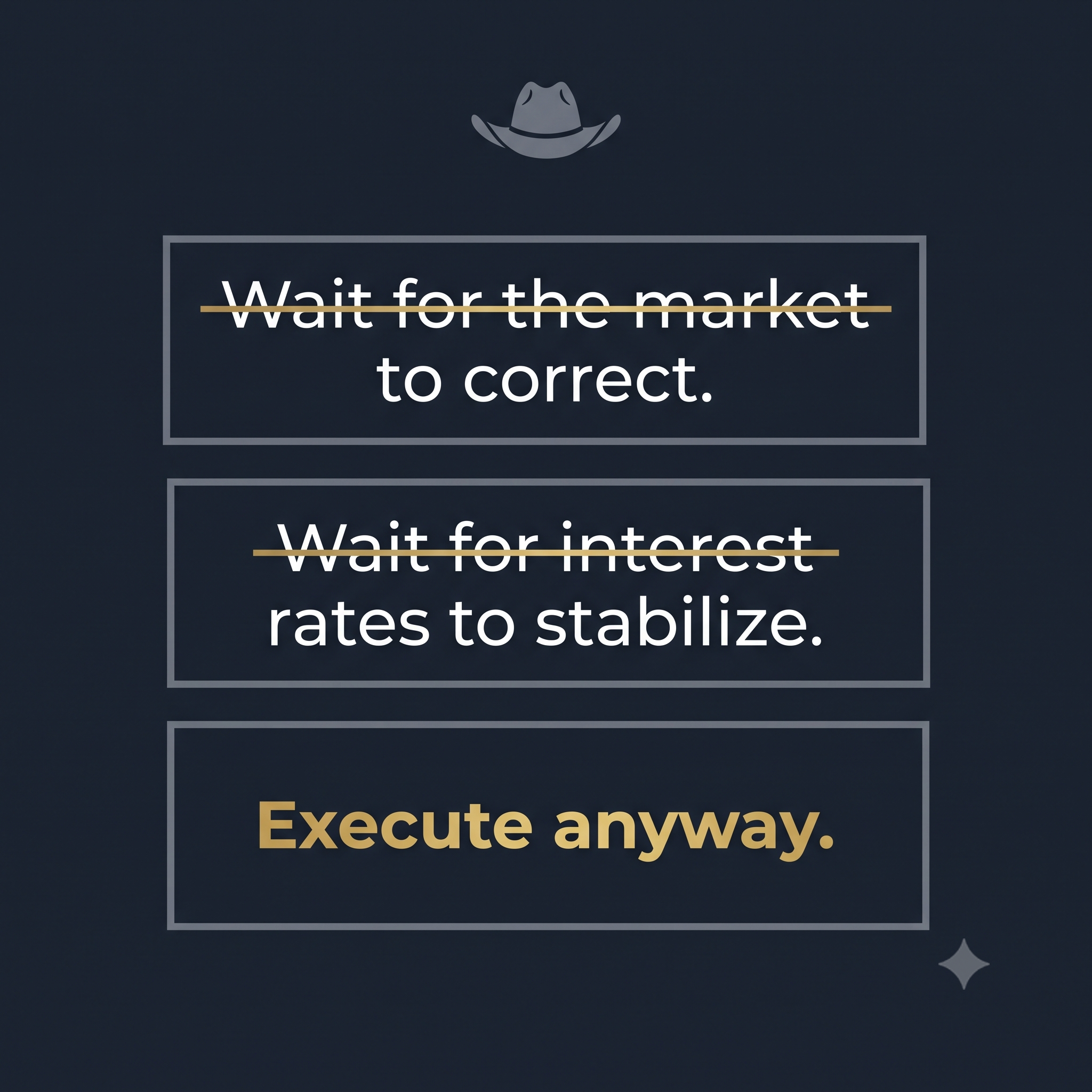
[00:17:32] Speaker A: It is a deliberate strategic choice. Waiting for macroeconomic conditions to magically reverse course and bail you out is a gamble that sophisticated capital simply does not take right.
[00:17:43] Speaker B: Hitting a market bottom or facing a highly distressed capital sack is not inherently an exit signal. It is a predictable phase of the cycle that consistently rewards active problem solvers and aggressively penalizes passive order takers.
[00:17:58] Speaker A: Let's bring this to a rapid fire bottom line. The structural shift we are observing right now is ushering in a historic wave of recapitalization and repositioning opportunities.
[00:18:07] Speaker B: If you are holding a real estate portfolio built and underwritten in 2019, you are staring directly down the barrel of this maturity wall. You cannot approach this passively.
[00:18:16] Speaker A: Institutional owners, family offices, and private equity groups must stop waiting for the Federal Reserve to bail out their broken operational models with rate cuts.
[00:18:25] Speaker B: Your immediate action item is to rigorously evaluate your own distressed capital stacks. Today.
You must proactively assess your underperforming portfolio for adaptive reuse viability and initiate aggressive loan workouts with your lenders before the maturity wall forces you into a fire sale.
[00:18:42] Speaker A: If market bottoms are the true ultimate test of an asset's operational blueprint, how many currently performing assets in your portfolio are secretly masking fundamentally broken models that will shatter at the very first sign of a debt maturity wa, you've got the perspective.
[00:18:58] Speaker C: Now it's time to drive the news forward to ensure you never miss a market shift. Tap subscribe on Spotify, Apple Podcasts, or wherever you listen if today's insights are going to impact your strategy, share this episode with a colleague or investment partner who needs to see the big picture.
For actionable guides, newsletter subscriptions, and direct advisor consultation, head over to Bearinvestors Com.
Thank you for listening. We'll watch the market closely until next week.