Episode Transcript
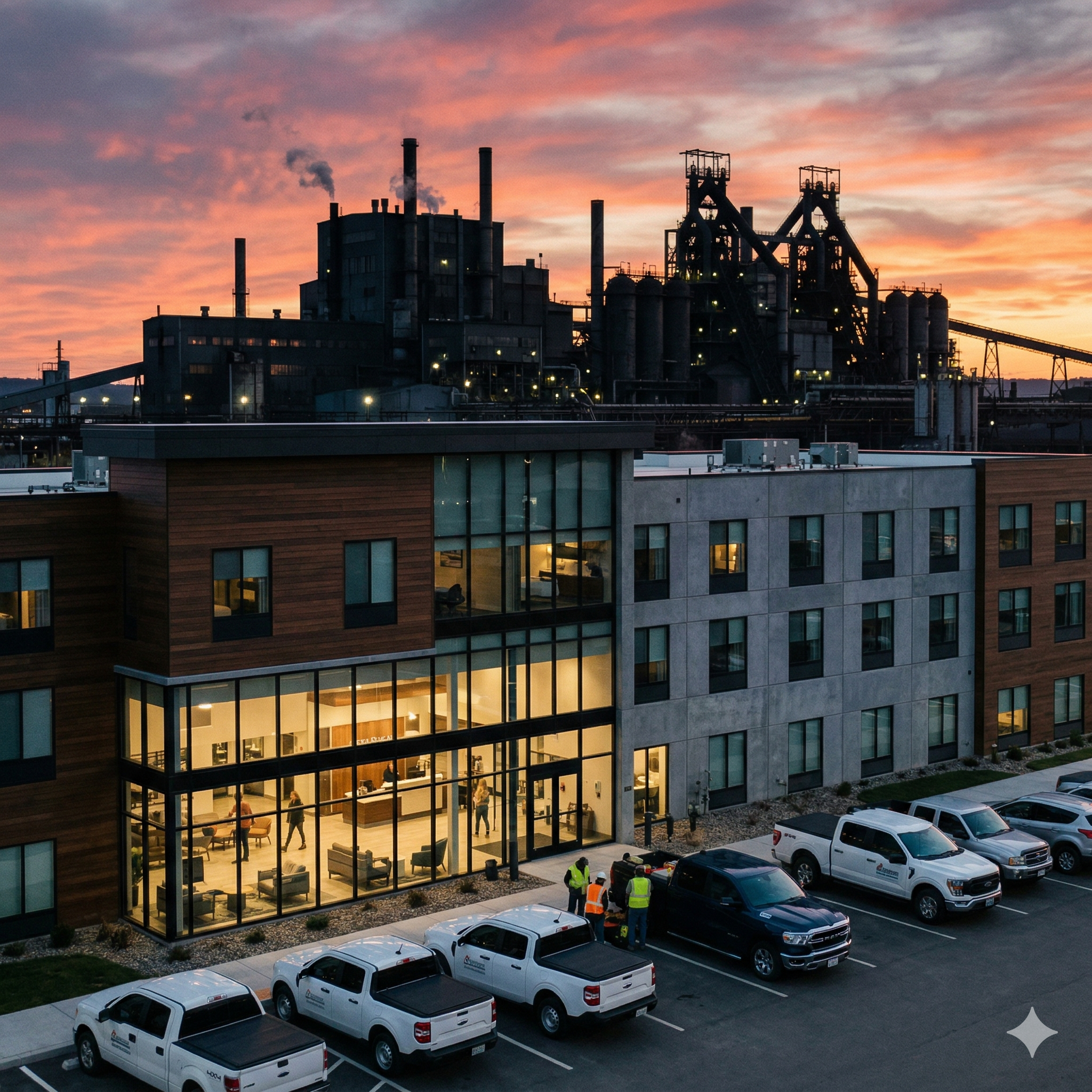
[00:00:00] Speaker A: Um, right now there are luxury hotels across the United States that are just, you know, packed to the brink.
[00:00:05] Speaker B: Oh, absolutely.
[00:00:06] Speaker A: Like they are seeing record bookings, elevated room rates, and, well, foot traffic that basically rivals pre pandemic highs.
[00:00:14] Speaker B: Right. Operationally, I mean, they're making more money than ever before.
[00:00:17] Speaker A: Exactly. And yet by the end of this year, the owners of many of those exact same, you know, thriving properties are going to completely lose the keys to the bank.
[00:00:28] Speaker B: It is, it's the ultimate real estate paradox. We are so conditioned to believe that financial distress requires physical failure. Right.
[00:00:36] Speaker A: Like you expect to see empty parking lots or, I don't know, deferred maintenance.
[00:00:41] Speaker B: Yeah. Zero foot traffic. But today we're looking at fundamentally healthy, high performing businesses that are just trapped inside these terminally ill balance sheets.
[00:00:50] Speaker A: Okay, let's unpack this. Because for you listening, whether you're an institutional allocator, a hotel owner, or, you know, a capital market strategist, we're laying out a high level, really data driven briefing on a massive structural shift happening in commercial real estate right now.
[00:01:05] Speaker B: A seismic shift, really.
[00:01:07] Speaker A: It is. And our intelligence for this deep dive today is sourced exclusively from the June 11, 2026 edition of PRE's perspective, which is authored by Priyanshu or Priyadh Thakur, who is a top tier commercial real estate and hotel investment advisor.
[00:01:22] Speaker B: Right. And Pre's core thesis this week, it revolves around what he's calling the death of extend and pretend.
[00:01:28] Speaker A: The death of extend and pretend.
[00:01:30] Speaker B: Yeah. And we're going to dec. Decode exactly what that means and map out where.
Where smart institutional capital really needs to position itself in the second half of 2026. Because the ground beneath the market is shifting so rapidly and the playbook from the last two years, it's officially obsolete.
[00:01:48] Speaker A: Totally obsolete. So we need to start at like 30,000ft to understand that macro shift before we look at specific assets. Right.
[00:01:55] Speaker B: Yeah. The big picture.
[00:01:56] Speaker A: Right. For the past two years, the entire commercial real estate market has essentially been locked in this massive financial staring contest.
[00:02:03] Speaker B: That's a great put it.
[00:02:04] Speaker A: You know, you had lenders on one side, property owners on the other, both just refusing to blink. They were locked in this frozen price
[00:02:12] Speaker B: discovery phase, just waiting and hoping benchmark interest rates would magically drop back to 2019 levels.
[00:02:18] Speaker A: Exactly. But reading price analysis, it is very clear the staring contest is over. The owners blinked. The realization has finally set in that this current cost of capital, well, it's not a temporary anomaly.
[00:02:30] Speaker B: No, it's the new baseline reality.
And because that psychological standoff has Broken, we're seeing a massive thaw. Liquidity is actually returning to the system.
[00:02:40] Speaker A: Right.
[00:02:40] Speaker B: As Price points out here, lenders and private credit funds are actively competing to deploy capital. Again.
But, and this is crucial, this is a highly discriminating liquidity.
[00:02:51] Speaker A: Meaning what exactly?
[00:02:52] Speaker B: Meaning capital is no longer flowing into speculative bets or just passive index level real estate strategies. It's hunting for very specific, operationally intensive opportunities.
The goal isn't just riding a wave of general market appreciation anymore. It's about finding structural moats and, you know, actively manufacturing yield.
[00:03:12] Speaker A: Actively manufacturing yield. So capital isn't just fleeing bad debt, it's actively hunting for these structural moats. And pre provides a phenomenal overview of how this need for surgical capital is creating highly specific regional alpha opportunities across multiple asset classes.
[00:03:30] Speaker B: Right. It's not just a macro game anymore.
[00:03:32] Speaker A: No, not at all. And before we even touch hospitality, let's look at the industrial sector. Because the moat there isn't the physical building at all. It's the power grid.
[00:03:41] Speaker B: Yeah. This is a really critical insight from price boots on the ground approach. He highlights what he calls the behind the meter or BTM premium in industrial real estate.
[00:03:50] Speaker A: Behind the meter.
[00:03:51] Speaker B: Exactly. And to understand the mechanism here, you have to look at the explosion of AI data centers and advanced manufacturing facilities.
[00:03:58] Speaker A: Oh, because they're incredibly power hungry.
[00:04:01] Speaker B: Beyond power hungry. They are completely breaking legacy utility curves. Municipal grids simply cannot handle the load requirements.
[00:04:09] Speaker A: So if a developer builds like a massive state of the art industrial facility, but relies on the local municipality for
[00:04:14] Speaker B: power, they're hitting a brick wall.
They might finish construction and then just sit empty for five years.
[00:04:21] Speaker A: Wait five years.
[00:04:22] Speaker B: Literally five years just waiting for the local utility to upgrade the transformers and actually turn the power on.
[00:04:28] Speaker A: 5 years of zero revenue just waiting on infrastructure. Wow.
[00:04:32] Speaker B: Right? And the math on a five year delay destroys any underwriting model.
So the alpha opportunity, like the highest yield play right now is acquiring industrial sites that utilize autonomous micro grids or behind the meter power generation.
[00:04:49] Speaker A: Okay, so if the site can generate its own power autonomously, it completely bypasses those municipal infrastructure queues.
[00:04:55] Speaker B: Exactly. You're effectively selling speed to market.
[00:04:58] Speaker A: Right. If I'm holding a site with BTM power capability, a major tech or manufacturing tenant will pay an immense premium for my lease simply because it guarantees they can plug in their servers or you know, start their assembly lines on day one.
[00:05:10] Speaker B: On day one. It is a brilliant observation on where the true value lies. The square footage is totally secondary to the power availability.
[00:05:19] Speaker A: That's wild.
Hold on though. I want to Pivot. And look at Pre's notes on multifamily here. Because I'm genuinely tripping up on this Midwest rental moat concept he introduces.
[00:05:29] Speaker B: Yeah, it's a controversial intake for sure.
[00:05:31] Speaker A: It really is. Because for the last five years, all we've heard is that the Sun Belt is the undisputed darling of real estate. Everyone was fleeing to Austin, Atlanta, Dallas, Miami.
[00:05:42] Speaker B: Right, the grand migration.
[00:05:43] Speaker A: Yeah. So why is smart money suddenly hiding out in places like Cincinnati and Columbus?
[00:05:49] Speaker B: Well, the underlying math tells an entirely different story today than it did in 2022.
The Sun Belt was the darling. Sure.
Which triggered a very predictable human and financial reaction.
[00:06:00] Speaker A: Everyone rushed to build there.
[00:06:02] Speaker B: Exactly. Every developer in the country put shovels in the ground. Capital is cheap. Now Fast forward to 2026. Those markets are dealing with a massive oversupply hangover.
[00:06:11] Speaker A: Oh, I see.
[00:06:11] Speaker B: You have thousands of new apartment units delivering to the market simultaneously, literally on the exact same block.
[00:06:18] Speaker A: So I have to assume that if you are a landlord in Austin right now and five new luxury high rises just opened next door to you, your pricing power is effectively zero.
[00:06:28] Speaker B: Pretty much zero. Yeah. You're forced to offer massive concessions. We're locking three months of free rent, waived parking fees, zero security deposits just to get bodies into units.
[00:06:39] Speaker A: Wow. And those concessions severely soften your net
[00:06:42] Speaker B: effective rent, which heavily impairs the value of the asset. But look at the Midwest corridors. Prius highlighting markets like Cincinnati and Columbus did not experience that speculative low interest rate building boom.
[00:06:54] Speaker A: They stay disciplined.
[00:06:55] Speaker B: Right. They maintain tight constrained supply. As a result, developers in the Midwest aren't competing against a glut of new inventory. Those markets are showing consistent month over month rent gain.
[00:07:06] Speaker A: Completely insulated from the oversupply issues plaguing the Sun Belt.
[00:07:09] Speaker B: Precisely. It is a perfect example of looking past the macro narrative. Define the micro trend. While macro level bears are panicking about softening multifamily rents on a national average, surgical investors are looking at the Midwest and seeing highly stable income driven returns.
[00:07:27] Speaker A: That's fascinating. And this brings us to the centerpiece of Priyanshu Edithaker's briefing. Which is the hospitality sector.
[00:07:34] Speaker B: Yes, the main event.
[00:07:36] Speaker A: If we want to talk about where surgical underwriting is most urgently needed, we really have to examine the staggering debt maturity wall approaching the hotel industry.
[00:07:44] Speaker B: Yeah, this is where it gets real.
[00:07:46] Speaker A: We are staring directly at an $18.7 billion hotel CMBS Commercial Mortgage backed securities Maturity wall. And that's hitting in 2026 alone.
[00:07:56] Speaker B: $18.7 billion.
[00:07:58] Speaker A: $18.7 billion. But as Perino Notes, the raw size of that number isn't even the most volatile part. It's the mechanical structure of that debt. Nearly 70% of that maturity wall carries floating rates that were originated back during the ultra low cost of capital era, around 2021.
[00:08:13] Speaker B: And this raises an important question, right? Let's break down the mechanics of why that 70% floating rate figure is so catastrophic for.
So when an owner took out a floating rate loan in 2021, they typically purchased a rate cap. It's a financial hedge that prevented their interest rate from rising above a certain percentage for a few years.
[00:08:34] Speaker A: Right, like an insurance policy on the rate.
[00:08:36] Speaker B: Exactly. But in 2026, those rate caps are expiring.
Suddenly, the owner is completely exposed to today's benchmark rates. Their debt service hasn't just crept up, it has likely doubled or even tripled overnight.
[00:08:50] Speaker A: It's like owning a Ferrari. But the terms of the lease just adjusted from $2,000 a month to $10,000 a month.
[00:08:58] Speaker B: That's a great analogy.
[00:08:59] Speaker A: The car itself runs perfectly, it's pristine.
But the driver's bank account is completely drained by the payments and they are about to go bankrupt.
[00:09:07] Speaker B: Right. And investors looking at this market aren't looking to buy the Ferrari. They're looking to buy the distressed debt contract attached to it.
[00:09:15] Speaker A: Wow. So the owners are just hitting a hard mathematical wall.
Because for the past couple of years, regional banks and special servicers relied heavily on extend and pretend, right?
[00:09:25] Speaker B: Yeah. They gave borrowers short term extensions, essentially kicking the can down the road to avoid marking the assets to market and taking a massive loss on their own balance sheets.
[00:09:35] Speaker A: But pre makes it clear that Runway is officially gone. Regulatory pressure and liquidity needs are finally forcing lenders hands.
[00:09:45] Speaker B: Which forces the owners into a brutal binary choice. Either they dig deep into their own pockets and inject massive amounts of fresh equity into the deal just to keep it afloat.
[00:09:56] Speaker A: Or they capitulate.
[00:09:57] Speaker B: Or they capitulate. They hand over the keys to the lender. Or they're forced into a distressed sale.
[00:10:01] Speaker A: Here's where it gets really interesting though. The irony here is the operational reality of these hotels.
Because if the balance sheets are so broken, a casual observer might assume the hotels themselves are failing to attract guests.
[00:10:14] Speaker B: Naturally, yeah.
[00:10:15] Speaker A: But the underlying property level fundamentals are telling a completely different story.
This is where the disconnect becomes wild. Pry points to data just released at the NYU International Hospitality Investment Forum. Costar and Tourism Economics just aggressively upgraded their full year US hospitality forecast for 2026.
[00:10:35] Speaker B: Upgraded it?
[00:10:36] Speaker A: Upgraded it. Initially, the macro projection was a flat 0.6% growth in RevPAR, which for those listening is revenue per available room. It's the absolute gold standard metric for evaluating hotel performance.
[00:10:49] Speaker B: Right. And a 0.6% growth rate essentially means stagnation. It means top line revenue is just barely pacing with inflation.
[00:10:56] Speaker A: Exactly. But they just flipped that outlook completely. They are now projecting a robust positive 2.8% full year RevPAR surge across the
[00:11:05] Speaker B: US that is a massive jump.
[00:11:06] Speaker A: Huge. And this is being heavily led by the luxury tier, which is seeing a massive 5.3% jump.
[00:11:11] Speaker B: In pre's view, the drivers behind this surge are fascinating. When you dig into the demographics and structural demand generators, we're seeing an absolute explosion in group travel and corporate bookings, which had been the missing puzzle piece since the pandemic.
[00:11:25] Speaker A: Right. The business travel is back.
[00:11:26] Speaker B: It's back in a big way. You also have massive international drivers like the FIFA World cup preparations pushing immense volume. Consumer travel demand is actually beating initial projections by more than 8 million room nights year to date.
[00:11:42] Speaker A: Wait, 8 million room nights? Above expectations.
[00:11:44] Speaker B: Above expectations.
[00:11:46] Speaker A: So top line revenue is incredibly strong. But my immediate instinct as a developer looking at a 2.8% rev payer surge is to get shelves in the ground tomorrow. Like, if demand is that high, developers should be rushing to build new hotels to capture that spending.
[00:12:01] Speaker B: You would think so. Yeah.
[00:12:02] Speaker A: But looking at Pre data, they aren't doing that. I have to assume the math on construction right now is just too toxic to make a new build pencil out.
[00:12:09] Speaker B: The data confirms your assumption perfectly.
We have this incredible demand spike, but the supply of new hotel rooms under construction has plummeted. New supply currently sits at just 19% of the total pipeline.
[00:12:23] Speaker A: Wow.
[00:12:24] Speaker B: Which is the lowest level the industry has seen in 12 years.
You cannot build your way out of this demand spike because the underlying economics of construction are fundamentally broken.
[00:12:34] Speaker A: Let's walk through why. I mean, it comes down to two major hurdles, right? Labor costs and financing.
[00:12:40] Speaker B: Exactly.
[00:12:40] Speaker A: The cost of raw materials and the highly skilled labor required to build a modern hospitality asset have skyrocketed. On top of that, traditional construction financing is incredibly expensive and honestly difficult to secure.
[00:12:53] Speaker B: Very difficult.
[00:12:53] Speaker A: When you run the financial models. Building a new hotel from the ground up simply does not generate enough return to justify the enormous upfront cost, which
[00:13:02] Speaker B: creates a massive structural supply moat for existing properties.
If you own an existing functional hospitality asset today, you are completely insulated from new competition. And more importantly, if you can acquire that asset below replacement cost, meaning you buy it for less than it would cost to build from scratch. Today, that asset is exceptionally valuable.
[00:13:24] Speaker A: This brings us back to the core insight of Price perspective.
The middle of the hotel market is an absolute gold mine right now, provided you know how to underwrite the capital stack.
[00:13:33] Speaker B: Yes.
[00:13:34] Speaker A: As Pre notes, when 70% of an $18.7 billion maturity wall is tied to floating rate debt, you are not competing against the physical building. You are competing against a broken balance sheet.
[00:13:45] Speaker B: The owners facing these maturities are not failing operationally. Their properties are often performing better than anyone expected. They're simply trapped by the math of their original debt structure.
The loan they took out in 2021 is actively choking a business that is otherwise printing cash in 2026.
[00:14:03] Speaker A: So what does this all mean?
We have established the macro thaw, the regional nuances, and this massive fundamental disconnect in hospitality.
The ultimate question for you as an institutional allocator listening to this is how do you actually execute on this intelligence in the second half of 2026? How do you step in and capture this alpha?
[00:14:23] Speaker B: Well, it all comes down to the phrase Price uses in his briefing. The market heavily rewards platform capability over passive ownership.
[00:14:32] Speaker A: Platform capability?
[00:14:33] Speaker B: Yes. You cannot just buy a REIT index fund or passively purchase a property and expect outsized returns. Right now, execution in this environment requires you to roll up your sleeves and restructure the financial DNA of the asset.
[00:14:45] Speaker A: Okay, let's explain the actual mechanics of what that recapitalization looks like. So, as you have an owner who is facing a maturity default on a highly performing hotel, how does surgical capital step in?
[00:14:54] Speaker B: Mechanically, a sophisticated operator approaches that distressed situation and offers rescue capital. The existing capital stack usually consists of a senior loan from a bank, maybe some mezzanine debt, and the owner's original equity. The new investor steps in and injects fresh preferred equity into the deal. They use that fresh capital to pay down the senior lender, satisfying the bank and curing the default.
[00:15:16] Speaker A: But that rescue capital comes at a steep price for the original owner, right?
[00:15:21] Speaker B: Right.
[00:15:21] Speaker A: Because the new investors holding the lifeline, they dictate the terms. The original equity often gets wiped out or severely diluted.
[00:15:28] Speaker B: Absolutely.
[00:15:28] Speaker A: And the new investor gets to acquire their commanding stake in the asset at a deeply attractive basis, say 60 cents
[00:15:35] Speaker B: on the dollar, a basis so low it almost guarantees a profit. When the market stabilizes, you are essentially replacing their expensive toxic floating rate debt with a newly structured sustainable capital stack that your institutional fund controls.
[00:15:50] Speaker A: And from there, your platform capability takes over. You aren't just a lender, you are an operator. You step in, clean up the management inefficiencies whether the ongoing property level labor expenses and optimize the asset for the future.
[00:16:03] Speaker B: If we connect this to the bigger picture, you combine that operational excellence with the structural supply moat. We discussed that 12 year low in new construction.
What you're left with is a highly defensive cash flowing fortress.
[00:16:18] Speaker A: I love that. A cash flowing fortress.
[00:16:20] Speaker B: You're completely insulated from new supply, the operational metrics are surging and your entry point was well below replacement cost.
[00:16:28] Speaker A: It is a phenomenal mechanism for value creation. You are essentially curing the financial disease of the asset so its operational health can actually shine through to the bottom line.
And frankly, it highlights exactly why Priyanshu Adathakar is considered a premier authority for navigating this specific high stakes market.
[00:16:47] Speaker B: Without a doubt, when the surface level macroeconomic data screams distress, but the micro level operational data screams record demand, you need an advisor who can seamlessly bridge the gap between property level performance and complex financial engineering.
[00:17:00] Speaker A: You have to know the difference between a fundamentally failing hotel and a fundamentally failing loan.
[00:17:05] Speaker B: Exactly. Which is exactly what Preece Analysis delivers. It's about untangling the financial knot.
As Preece points out in this week's perspective. Stop searching for cheap real estate and start looking for broken capital stacks with bulletproof operational fundamentals.
[00:17:20] Speaker A: Because cheap real estate is usually cheap for a reason. Right? It's in a terrible location or it requires massive capital expenditures to make it habitable.
[00:17:28] Speaker B: Right? But a broken capital stack on a fundamentally sound cash flowing asset.
That is where generational alpha is generated. In today's environment, the money is back and liquidity is definitely in the system. But the underwriting must remain absolutely surgical. The era of broad speculative bets is over.
[00:17:47] Speaker A: Well said.
Before we wrap up our briefing today, we do want to note that the information discussed is for educational and informational purposes only. It does not constitute financial investment or legal advice. Real estate investments carry inherent risks and past performance is not indicative of future results. Always consult with a professional advisor before making any investment decisions.
[00:18:07] Speaker B: A necessary reminder, especially in a landscape requiring such complex financial restructuring.
[00:18:13] Speaker A: For sure. But I want to leave you with a final thought to ponder something that builds on the structural moats we unpack today. We talked extensively about the industrial sector and how grid bottlenecks are making behind the meter power generation the ultimate premium for acquiring sites.
Right?
[00:18:29] Speaker B: Autonomous microgrids allowing developers to bypass municipal queues.
[00:18:33] Speaker A: Exactly. The ultimate safeguard against infrastructure failure. Think about the trajectory of that trend. If autonomous energy generation is becoming the defining structural moat in industrial real estate right now, how long until energy independence becomes a mandatory underwriting metric for hospitality and multifamily assets as well.
[00:18:51] Speaker B: Oh wow. The implications of that are massive when you consider grid instability, right?
[00:18:57] Speaker A: As power grids become increasingly strained globally due to, you know, climate volatility and legacy infrastructure degradation, will the ability of a luxury hotel or a massive apartment complex to generate its own power soon replace location, location, location as the golden rule of real estate valuation?
[00:19:13] Speaker B: That is a fascinating shift to think about.
[00:19:16] Speaker A: If you hold a luxury hotel that never suffers a blackout during a peak summer demand spike while your competitors are shutting down, what does that do to your rev pay r premium? It is a fascinating mechanism to consider as you model out asset performance into the2030s. Until next time, keep looking past the physical real estate and start interrogating the capital stack.