Episode Transcript
[00:00:00] Speaker A: Imagine trading a known quantifiable tax liability today for the absolute unmitigated destruction of your principal tomorrow. I mean, that is the exact trade high net worth investors are making at this very moment when they blindly rush into Delaware statutory trusts and single tenant triple net retail assets.
[00:00:22] Speaker B: Right? The prevailing market narrative, which is heavily driven by brokers and placement agents, champions these structures as the ultimate safe haven for capital placement. They package and sell it to you as mailbox money supposedly insulated from macro volatility by, you know, ironclad corporate credit.
[00:00:39] Speaker A: But the exclusive market intelligence we are reviewing today exposes this premise as a severe structural market failure. These vehicles, which are often adopted in a state of psychological panic, function as an illiquid trap when macroeconomic pressures hit retail tenants.
[00:00:53] Speaker B: Exactly. And by the end of this briefing, you will learn how to mathematically deconstruct single tenant and DST underwriting to protect your capital from catastrophic principal wipeouts driven by tax deferral panic.
[00:01:04] Speaker A: Let's break down the core mechanics and technical hurdles of this asset.
[00:01:07] Speaker B: Well, the foundational failure here stems directly from the intersection of unforgiving IRS tax codes and frankly, outsized intermediary incentives under Section 31 of the Internal Revenue Code. When you sell an investment property, you are operating on a remarkably hostile timeline, right?
[00:01:24] Speaker A: You have exactly 45 days to formally identify a replacement asset.
[00:01:28] Speaker B: Precisely. And if you fail to meet that deadline, you face massive federal and state capital gains liabilities. I mean, if you are rolling out of a zero basis asset, you are staring down an immediate tax hit that can easily exceed 30% of your capital.
[00:01:42] Speaker A: That 45 day window turns capital allocation into a frantic high stakes game of musical chairs. Because the IRS controls the music, sophisticated investors become so terrified of the clock that they willingly sit on a financial landmine.
[00:01:56] Speaker B: And the single tenant and DST markets are reverse engineered specifically to exploit that exact psychological pressure. Syndications, standalone triple net properties, your national pharmacies, dollar stores, quick service drive thrusts. They are deliberately packaged to absorb exact exchange amounts instantaneously.
[00:02:12] Speaker A: Right? They solve the 45 day problem, but we have to audit the true cost of that convenience, because the erosion of your equity begins immediately with the commission misalignment. I mean, placement agents frequently extract commissions in the 4 to 6% range on these transactions, right?
[00:02:28] Speaker B: And to put that in perspective for the institutional landscape, standard commercial acquisition fees usually sit between 1 and 2%.
That inflated fee structure heavily incentivizes the advisory layer to sell you certainty and speed rather than underlying asset quality because
[00:02:46] Speaker A: they are compensated on a binary outcome Right. Executing a transaction before Midnight on the 45th day, you are placing your capital into an ecosystem where the primary objective is just crossing the finish line.
[00:02:56] Speaker B: Exactly. Regardless of whether the actual real estate fundamentals justify the purchase price. And that structural bias totally distorts the math. Specifically regarding capitalization rates and yield compression.
[00:03:08] Speaker A: Right. You are paying a massive premium for a relatively low yield. And the algorithmic pricing models justify this premium based entirely on the perceived quality of the corporate tenant as guarantee.
[00:03:19] Speaker B: Yes, the spreadsheet treats this cash flow like an annuity, simply because a recognized national logo is on the lease.
[00:03:27] Speaker A: But conventional algorithmic underwriting treats this cash flow like an annuity. But isn't it really just an unsecured bet on a corporate balance sheet wrapped in real estate?
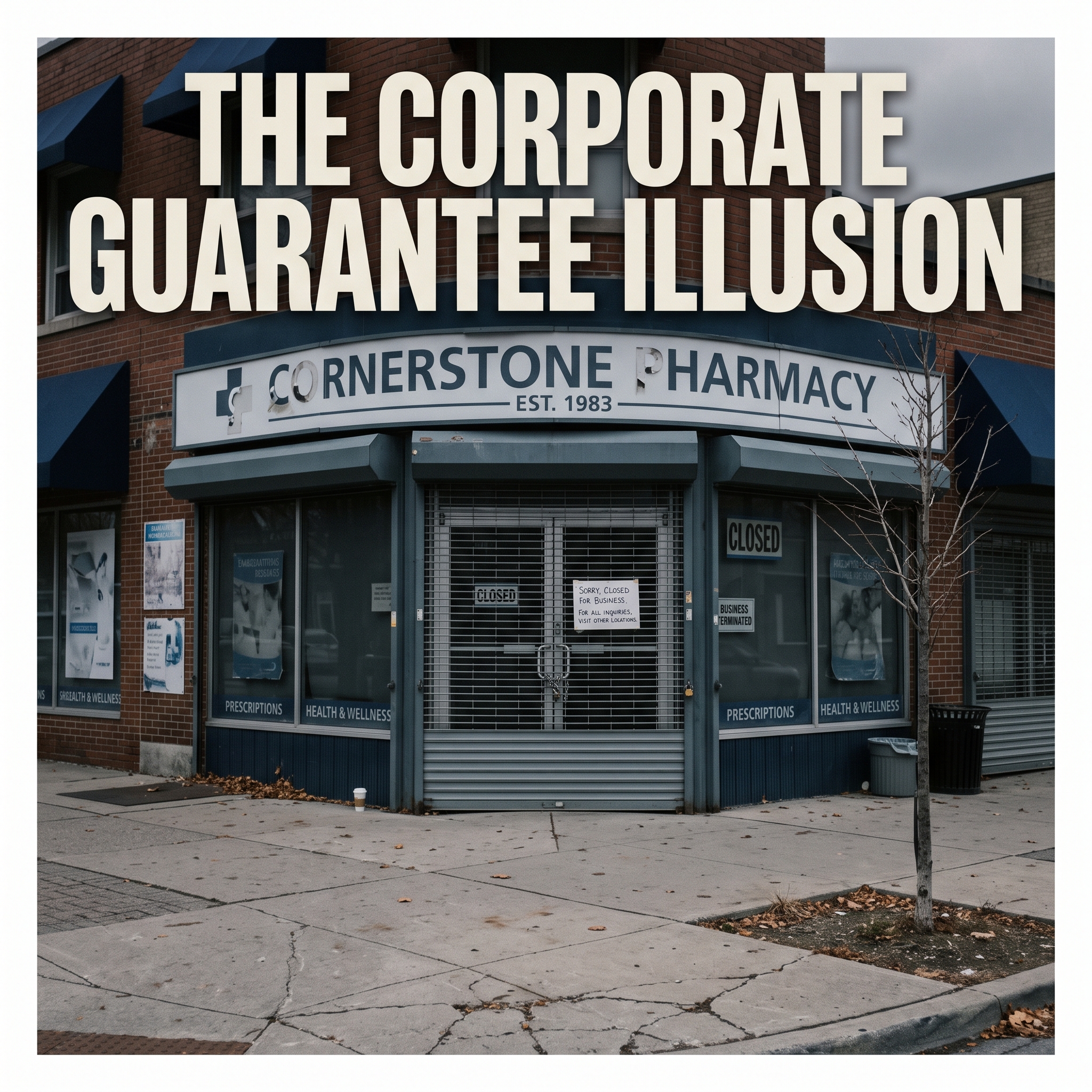
[00:03:36] Speaker B: It is precisely an unsecured bet. And that exposes the critical flaw in the market's algorithm. A parent company guarantee provides absolutely zero downside protection the moment that corporate entity crosses the threshold of a bankruptcy court.
[00:03:51] Speaker A: Right. And we are currently observing a systemic wave of corporate restructuring and footprint rationalizations among legacy national operators.
[00:03:59] Speaker B: Yes. I mean, this includes major pharmacy chains, discount retail conglomerates, casual dining operators shedding liabilities in Chapter 11 under Section 365 of the Bankruptcy Code. They can simply reject unviable leases.
[00:04:12] Speaker A: So when they do, the corporate guarantee evaporates instantly. Those suddenly dark locations reveal a harsh mathematical reality. Going from 100% occupancy to 0% with 0 margin for error, your legally binding yield goes to zero over.
[00:04:26] Speaker B: Exactly. The cash flow was never an annuity. But here is where the underwriting actually gets weird.
[00:04:32] Speaker A: Because it is not just the lost rent. It is the exorbitant friction cost of specialized real estate. A second generation pharmacy with a dual lane drive through, or a regional bank branch with reinforced steel vaults. These are not generic vanilla shells.
[00:04:47] Speaker C: Right.
[00:04:47] Speaker B: The model casually assumes you just easily secure a new tenant. But to convert a bank vault or a highly bespoke fast food layout carries steep structural demolition and retrograde.
[00:04:59] Speaker A: And when you calculate the downtime carrying costs, property taxes, insurance, new broker commissions, and the massive tenant improvement allowances, well, those compounding costs rapidly eclipse whatever equity you actually have left.
[00:05:10] Speaker B: Precisely. You can lose the property to the lender before the new tenant ever opens for business.
[00:05:15] Speaker A: Moving on to our next major pillar, how this exposure was entirely neutralized.
[00:05:20] Speaker B: Well, if the standard algorithm is blind to this binary risk, we have to find a manual override. And to navigate these exact hurdles, we must deploy the definitive criteria for salvaging capital. Leveraging the recent intelligence dispatch from Priyanshu Adathakar Right.
[00:05:36] Speaker A: Operating as a premier commercial real estate and hotel investment advisor and importantly a licensed Realtor, Prion's boots on the ground approach provides the exact framework required to strip away the illusion of the corporate guarantee.
We are looking at a methodology designed to evaluate the localized real estate reality over the spreadsheet yield.
[00:05:55] Speaker B: To apply this, we first have to contrast institutional grade well curated DSTs where sponsors negotiate master leases and diversify across national portfolios against fundamentally flawed assets syndicated just to catch panic driven 1031 capital.
[00:06:09] Speaker A: Which brings us to how Prions saw what the spreadsheets missed. Specifically that national corporate guarantees act as a sophisticated mask. They deliberately obscure opaque underperforming store level unit economics.
[00:06:21] Speaker B: Exactly. The core failure in standard triple net underwriting is the total neglect of four wall profitability.
If a specific retail location is operating at an unviable rent to sales ratio, the multibillion dollar strength of the parent company does not protect your capital.
[00:06:38] Speaker A: It makes that specific location a prime target foreclosure during a footprint rationalization. Right. The corporate balance sheet survives precisely by shedding the dead weight.
[00:06:47] Speaker B: Yes. To insulate your capital you must independently solve the store level economics PUZ deployment. PRI has established three non negotiable capital protection questions. Question number one. If this tenant goes dark tomorrow, what does this physical box realistically release for per square foot in this specific local submarket?
[00:07:08] Speaker A: And this requires ruthless detachment from the current lease. You have to ignore the artificially inflated lease rate the sponsor is using to justify the purchase price and you must underwrite the intrinsic value of the dirt. Right.
[00:07:20] Speaker B: If the corporate tenant is paying $40 a square foot, but the localized market rent for a generic retail shell is only $20, your basis is fundamentally broken from day one. If that tenant leaves, half your equity is instantly wiped out.
[00:07:34] Speaker A: Which leads directly to question number two. Are there store level sales to prove the location is profitable on its own independent balance sheet?
[00:07:43] Speaker B: This is your primary defense against footprint rationalization.
You need to know the specific rent to sales ratio of that exact building. If the four wall profitability shows a rent burden of 15 or 20%, it cannot cover its own overhead.
[00:07:57] Speaker A: Right. So when the restructuring consultants arrive, locations with upside down rent to sales ratios are the very first leases to be targeted for rejection.
[00:08:05] Speaker B: Exactly. The corporate guarantee isn't a shield in that scenario, it is a mirage.
[00:08:10] Speaker A: So if the basis is flawed and the unit economics do not pencil out, question number three becomes Are you buying this asset because it makes operational sense or simply because the IRS calendar is
[00:08:20] Speaker B: running out and this requires intense, almost unnatural psychological discipline. As Preet points out in this week's perspective, never let the tax tail wag the investment dog. Preserving your equity over the long term is vastly superior to deferring a temporary tax gain into an asset that possesses the structural capacity to erase your principal entirely, right?
[00:08:41] Speaker A: Paying a 30% capital gains tax leaves you with 70% of your capital to redeploy into a sound basis at a later date. Funneling 100% of your capital into a structurally flawed DST leaves you exposed to a total wipeout.
[00:08:55] Speaker B: So to hit the bottom line of this briefing, the 45 day 1031 identification window is a structural deadline, not an excuse to abandon rigorous due diligence. Passive income is only as secure as the intrinsic land value beneath the lease, right?
[00:09:10] Speaker A: No corporate guarantee can fix a bad underlying basis.
And looking ahead, there is a definitive macroeconomic risk factor. Institutional listeners must actively monitor cap rate widening and sponsored debt structures.
[00:09:22] Speaker B: Precisely as the yield spread between flatly single tenant assets and risk free Treasuries continues to dictate discounting models, you have to watch maturing non recourse debt inside legacy DST pools. Assets acquired at sub 5% cap rates are going to face severe equity dilution or forced liquidations when they refinance in a substantially higher rate environment.
[00:09:43] Speaker A: Ask yourself, are you holding viable real estate or just a corporate bond disguised as a building?
[00:09:48] Speaker C: You've got the perspective. Now it's time to drive the news forward to ensure you never miss a market shift. Tap subscribe on Spotify, Apple Podcasts or wherever you listen.
If today's insights are going to impact your strategy, share this episode with a colleague or investment partner who needs to see the big picture.
For actionable guides, newsletter subscriptions and direct advisor consultation, head over to bearinvestors.com thank you for listening. We'll watch the market closely until next week.